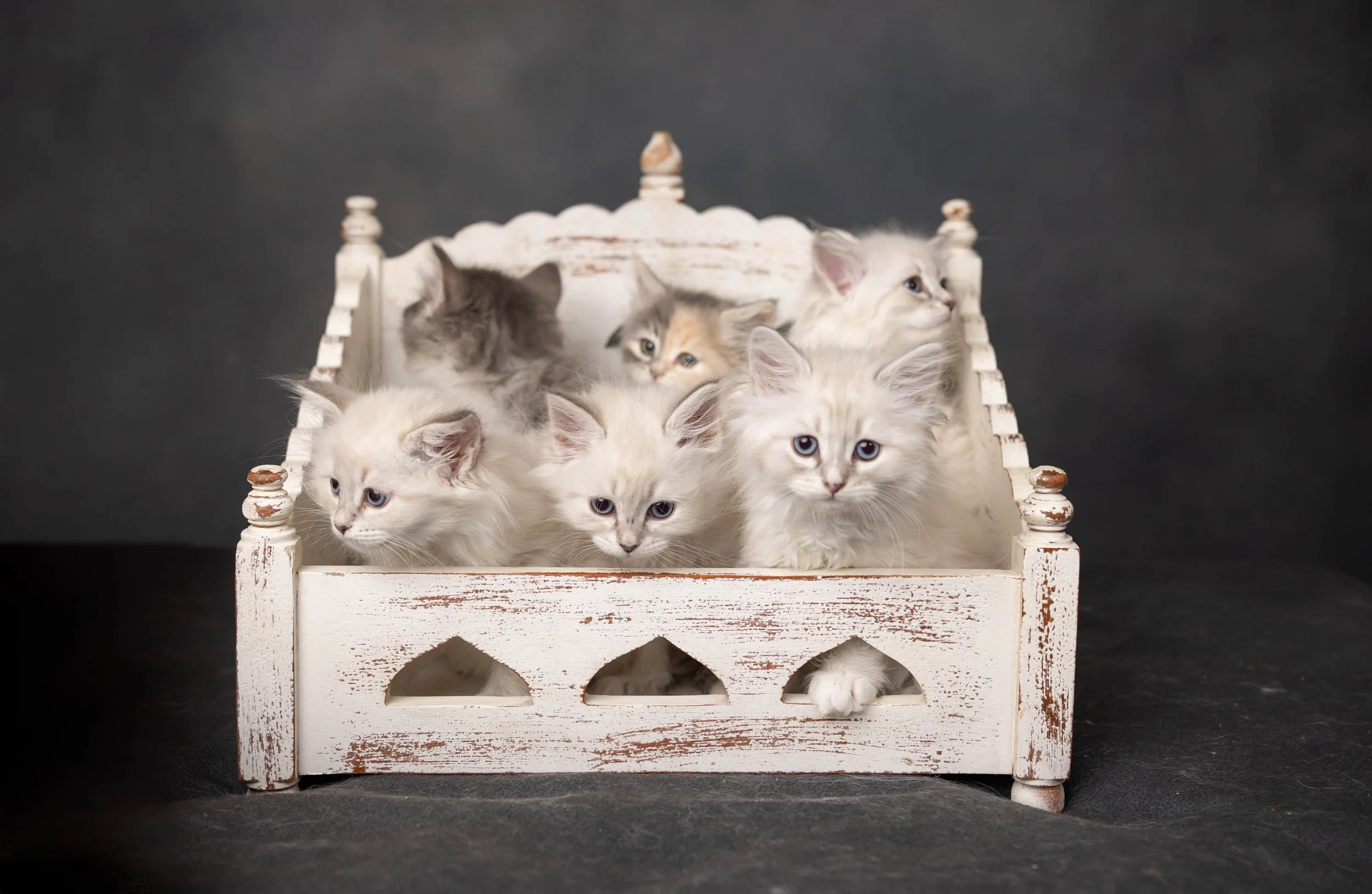
Caring for Your New Kitten
Bringing home a new kitten is exciting, but it’s also a very big change for your little one. Your kitten is leaving behind everything familiar—their mother, siblings, routines, smells, and the home they have known since they were born. The first few days and weeks are an important time for helping your kitten feel safe, secure, and connected to you.
Start Small
When your kitten first arrives home, resist the temptation to give them immediate access to the entire house. A smaller, quiet space helps kittens adjust without becoming overwhelmed.
Set up a comfortable room or enclosed area with:
Food and fresh water (refer to your Bringing Home Your New Kitten guide for information on what food and litter your kitten is using)
A litter box placed away from food
A cozy bed or blanket
A scratching post
Kitten-safe toys
A place to hide and rest
Spend plenty of quiet time nearby. Sit on the floor, talk softly, play gently, and allow your kitten to approach you. Some kittens will be exploring within minutes; others need a little more time. Both are completely normal.
Follow the 3-3-3 Rule
A helpful guideline for bringing home a new kitten is the 3-3-3 rule.
During the first 3 days, your kitten is decompressing and learning that this new environment is safe.
Over the first 3 weeks, your kitten begins learning your household routines, becoming more confident, and forming relationships with family members.
By approximately 3 months, most kittens feel fully at home and have developed a strong sense of belonging.
These aren't deadlines. Every kitten is an individual, so let your kitten's behavior guide the pace.
Keep Food and Litter Familiar
The first few days are not the ideal time to make unnecessary changes. Continue feeding the food your kitten has been accustomed to and use the same or a similar litter whenever possible. Sudden dietary changes can contribute to digestive upset, especially when combined with the stress of moving to a new home.
If you would like to change foods later, make the transition gradually. We will provide you with guidelines on changing to a new food. Watch your kitten's eating, drinking, urination, and bowel movements closely during the first week. These everyday habits are some of the best indicators of how well your kitten is adjusting.
With regards to litter box training - your kitten will be litter box trained; however, we use pine pellets in our kitten nursery. We will provide you with a bag of pine pellets to mix in with your litter of choice. It will only take your kitten just a minute to figure out where their new litter box is located, and mixing in ½ cup of pine pellets with your litter will make his/her new litter box seem like home. After mixing in pine pellets for a few days, you can eliminate them and continue with your own litter.
Establish a Relationship With Your Veterinarian
Schedule your kitten's first appointment with your veterinarian shortly after coming home, according to the timeline provided in your contract and health records.
Bring all vaccination, deworming, testing, and other health records provided by us at delivery, with you. Your veterinarian can establish a baseline for your kitten's health and help you plan future vaccinations, parasite prevention, spay/neuter care, and routine wellness visits.
Never hesitate to contact your veterinarian if your kitten stops eating, repeatedly vomits, develops persistent diarrhea, has difficulty breathing, becomes unusually lethargic, or simply seems significantly different from normal.
Build Trust Through Routine
Kittens thrive on predictability. Feeding, playtime, grooming, bedtime, and quiet time occurring at approximately the same times each day help your kitten understand what to expect. This is also where bonding begins.
Hold your kitten gently. Touch their paws and ears. Brush their coat. Speak to them frequently. Reward calm, confident behavior. Introduce new experiences gradually and positively. These small interactions teach your kitten something incredibly important:
You are their safe person and this is the time to build trust.
Play Is Important
Play isn't just entertainment—it is an important part of your kitten's physical, emotional, and social development. Provide opportunities for interactive play every day using wand toys, balls, tunnels, and other kitten-safe toys. Siberians are intelligent, athletic cats and often enjoy climbing, exploring, puzzle toys, and learning new behaviors.
Avoid encouraging kittens to attack hands or feet during play. Those adorable little kitten pounces aren't nearly as cute when your kitten grows into a 15-pound adult cat. We recommend redirection and a firm “no-no” to discourage unwanted kitten behavior.
Introduce Children and Other Pets Slowly
New relationships should never be rushed.
Children should initially sit quietly and allow the kitten to approach them rather than chasing, carrying, or cornering the kitten. Teach children how to recognize when the kitten has had enough interaction and needs a break.
Introductions to other pets should also happen gradually. Begin with separate spaces and smell exchanges before progressing to supervised face-to-face interactions. Some of our customers put a new kitten in a room beside an existing cat, allowing the two to explore each other under the door. A small pop-up tent also works well and protects your new kitten. We use a pop-up tent to introduce litters to the rest of our cats.
Your goal isn't simply for everyone to tolerate one another. It's to create positive associations that can develop into lifelong relationships.
Protect Their Sleep
Kittens need a tremendous amount of sleep for healthy growth and development. It can be tempting to wake a sleeping kitten because everyone wants to cuddle the new family member, but allow your kitten plenty of uninterrupted rest.
A kitten who knows they can retreat somewhere safe and sleep undisturbed will often become more confident—not less social.
Begin Grooming Early
Siberians have beautiful triple coats, and establishing a grooming routine while your kitten is young makes lifelong coat care much easier. We have been using a small slicker brush on your kitten weekly.
Introduce brushing, nail trimming, ear checks, dental care, gradually. Keep sessions short and positive. A treat, cuddle, or favorite activity afterward can help your kitten associate grooming with something pleasant.
Keep Your Kitten Safe
Kittens are curious, athletic, and remarkably talented at finding things you didn't realize were accessible. Before your kitten arrives, check your home for hazards such as electrical cords, strings, ribbon, hair ties, medications, cleaning products, toxic plants, open windows, reclining furniture, and small objects that could be swallowed.
Be especially careful with doors leading outdoors. Even kittens intended for harness walks or secure outdoor enclosures should never be allowed to roam freely outside.
Most of All, Build the Bond
Your kitten doesn't need a perfect home. They need a home where they feel safe, understood, and loved.
The first weeks and months together are an extraordinary opportunity to build trust. Talk to your kitten. Play with them. Groom them. Let them sleep beside you. Include them in everyday family life and learn the little behaviors that make them uniquely themselves.
At Sunshine Snow Siberians, we believe that beginnings make all the difference. The relationship you build with your kitten now can become the foundation for years of companionship—and, for many families, a bond that is far deeper than they ever expected.