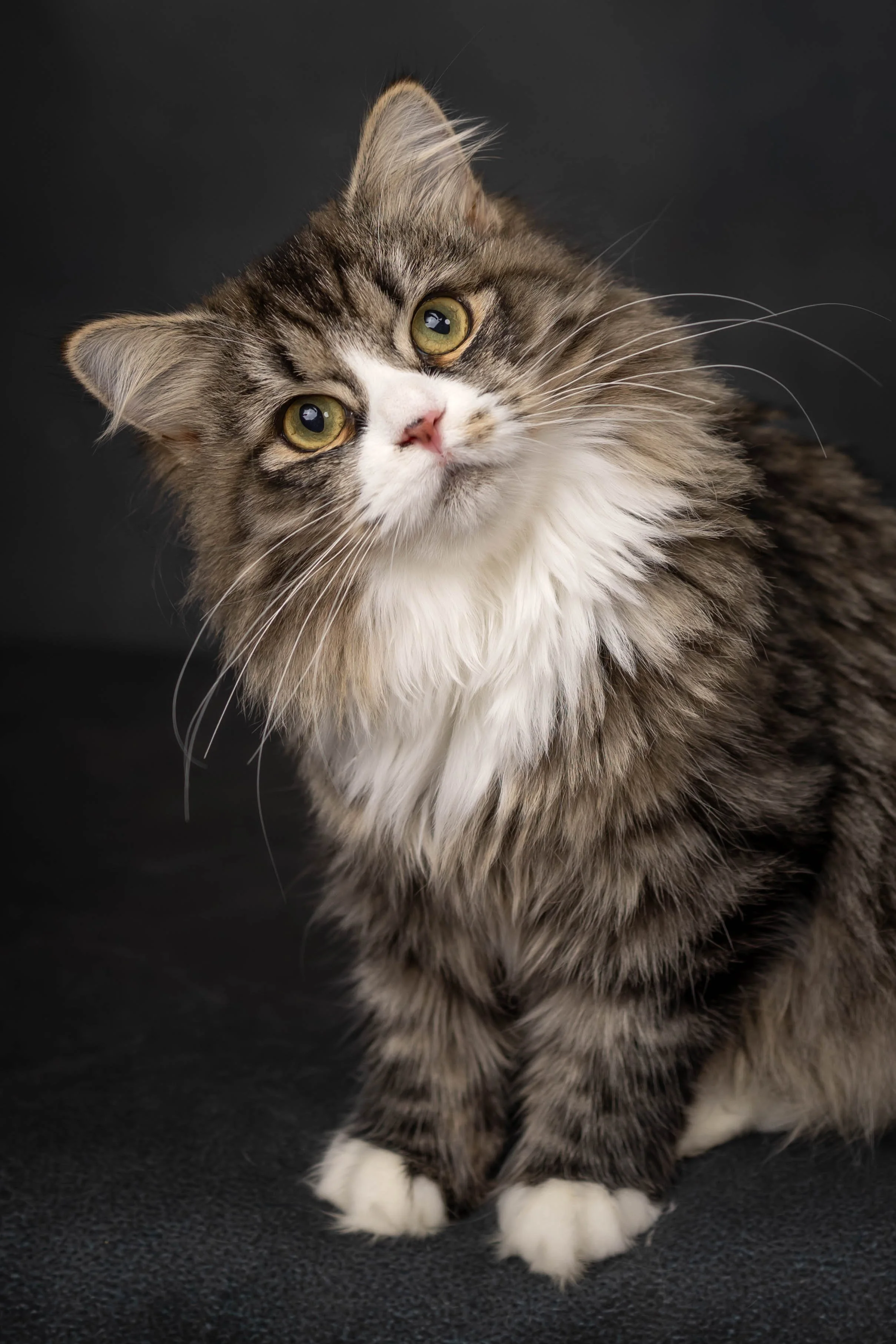
Is the Siberian breed right for you?
Siberian cats are a majestic and ancient breed known for their friendly nature, striking appearance, and hypoallergenic qualities.
History and Origin
Siberian cats, also known as the Siberian Forest Cat, are believed to have originated in Russia where they have been cherished for centuries. Russia has an amazing cat culture and the Siberian is revered. They are considered one of the oldest natural breeds, with references dating back to around 1000 AD. These cats were initially valued for their hunting skills and ability to thrive in cold climates. The breed gained formal recognition in the 1980’s and has since become popular worldwide, especially in the United States after the cold war.
Physical Characteristics
Siberian cats are medium to large-sized, muscular cats with a triple coat that protects them from the cold. Their fur is semi-longhaired, dense, and water resistant. With regular grooming and using the proper tools, Siberian coats are relatively easy to manage. Even with grooming they shed slightly - the great thing is that their hair is downy and fine, and easily vacuumed. Siberians have a bushy tail, rounded paws, and a broad head with expressive round eyes. Siberians come in various colors and patterns.
Hypoallergenic Qualities
While no cat is completely hypoallergenic, the Siberian is a breed that produces lower levels of Fel d 1, the primary protein in cat’s saliva that causes an allergic response. At Sunshine Snow Siberians, we have successfully placed Siberians with many allergy sufferers, and our relationship with Siberians began due to our own concern with allergies.
Temperament and Behavior
Siberians are known for their affectionate and friendly nature. They are social felines that enjoy the company of humans and other pets, including dogs. Many of our Siberian families have busy households, children, and pets including large dogs, and their Siberians fit right in. The playful and intelligent demeanor of the Siberian makes them great companions. Siberians are easy to harness train, and love the outdoors. Siberians are known for their vocalizations, often communicating with chirps and melodic sounds rather than brash meows. Each of our cattery pets has a different vocalization pattern, most with extremely quiet and sweet meows, although we have one King who is quite loud and makes his presence known!
Care and Health
Siberians are generally healthy cats but as with any feline, we recommend regular veterinary check-ups. We do genetic testing on all of our breeders to ensure that they are free from Hypertrophic cardiomyopathy (HCM) and Polycystic kidney disease (PKD); however, cats can pick up viruses and parasites from other animals and humans, so we see our vet annually. Caring for a Siberian cat involves regular grooming to maintain their coat’s health. Siberians are also known to produce less of the allergenic protein Fel d 1, making them a suitable choice for allergy sufferers. We also believe that pet insurance is one of the best investments available to cat owners.
Unique Traits
Playful Nature: Siberians love to play and explore, often engaging in interactive games with their owners. One of our favorite past times is taking our kittens through obstacle courses during their training. They are fast learners and problem solvers, love to climb, jump, and pretend to hunt. We have harness trained our Siberian pets and hike with them on a regular basis. Our pets also have access to a catio which they love. Siberians enjoy observing people and nature.
Late Maturity: Siberians take longer to reach full maturity, often not settling into their adult behavior until around five years of age. Their coats and coloring continue to develop through five years of age as well.
Water Affinity: Unlike many cats, Siberians are known to enjoy water and may even join their owners in the shower or play with water sources. We introduce our kittens to a shallow bath when they are young, but that is no guarantee that they will love water. In our experience, a Siberian’s affinity for water seems to be based on personal preference and the proper introduction to water. We do have several Siberian families who take their cats boating!
As you read about Siberian cats, you may come across information about Neva Masquerades. Nevas are known for their striking blue eyes and a masked appearance with light fur at the base and darker ears, face, legs, and tail tips due to the existence of the colorpoint (CP) gene. The majority of our breeders come from bloodlines which include Neva Masquerades, although several of our breeders are “traditional in color” and produce like offspring. Many years ago, the colorpoint gene was introduced into the Siberian bloodline due to cross breeding with varieties such as the Siamese cat. Cross breeding is a purposeful practice by breeders trying to produce new color coat combinations or physical and temperament characteristics in animals. Dog examples include the infamous Chesapeake Bay Retriever. Out of the 350 recognized dog breeds across the world, over 200 of them originated through cross-breeding. The introduction of the colorpoint gene in the Siberian breed is believed to have introduced herediatary diseases such as HCM and PKD which is why we test our breeders for this condition. The Neva Masquerade breed was officially recognized as an independent breed by the Federation Internationale Feline (FIFe) in 2011 and is recognized by most cat associations today.
Conclusion
Siberian cats are not only beautiful but also make wonderful companions due to their friendly and playful nature. Their unique characteristics and adaptability to various living situations make them a popular choice among cat lovers. Siberian cats are truly remarkable animals that bring joy to many households.
Sources: The Spruce Pets, WebMD, TICA, FIFe